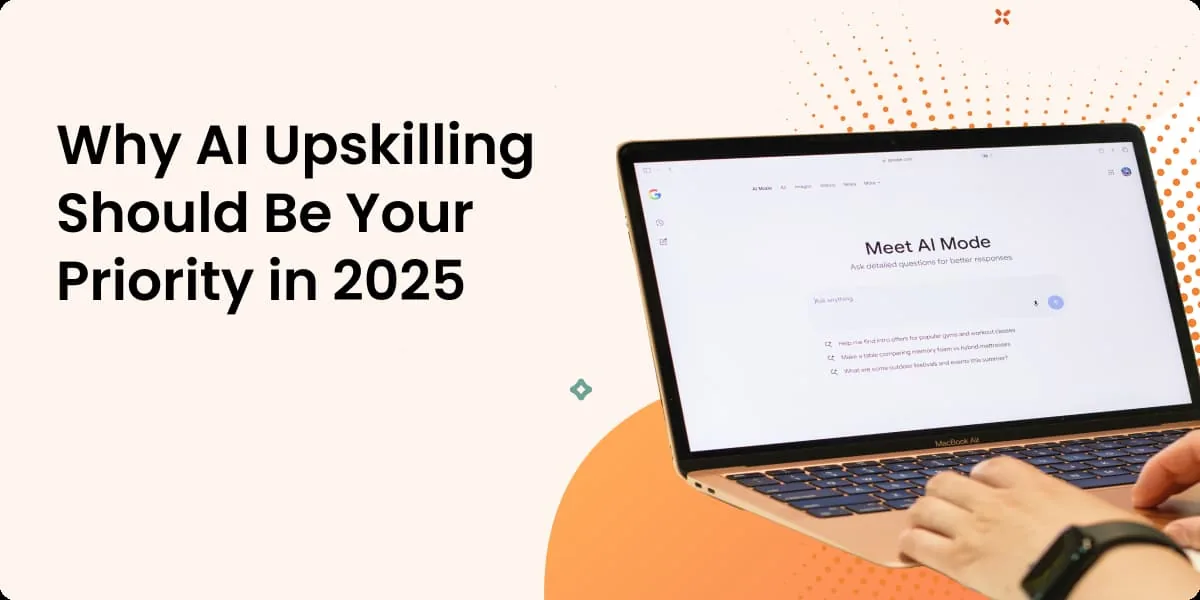

AI literacy is quickly becoming career currency. Businesses that invest in AI upskilling today will be better prepared to handle tomorrow’s talent gaps, compliance challenges, and productivity shifts.
Artificial Intelligence isn’t on the way; it’s already here. From customer service chatbots to productivity assistants like Copilot and ChatGPT, AI is showing up in the tools people use every day. And while it may automate tasks, it also creates new expectations for how employees work, make decisions, and add value.
Why AI training matters right now
Think about how quickly AI has moved from emerging technology to an everyday tool. ChatGPT became the fastest-growing app in history. Microsoft rolled out AI assistants to 365 users worldwide. Companies across various industries utilize AI to enhance efficiency, lower costs, and streamline decision-making processes.
But here’s the catch: all of that progress only works if your people know how to use the tools, and use them responsibly.
We’re already seeing a shift in how employers evaluate talent. Many are seeking AI fluency, even in non-technical roles. Research shows six out of every 10 business leaders expect AI and GenAI to transform their organizations.
Pressure is growing, but so is opportunity. When employees are confident using AI, it opens the door to faster workflows, better decision-making, and more creative problem-solving. Instead of fearing job loss, they start focusing on the value they can add alongside AI.
Training helps everyone, from the frontline to the C-suite
One of the biggest challenges with current AI skilling efforts is that most programs are designed for engineers or executives. That leaves out huge segments of the workforce, especially frontline employees.
Think of it as democratizing AI, not just training your “high-potential” staff, but empowering your entire workforce to engage with these tools in meaningful ways.
To unlock the full value of AI, you have to create clear learning pathways that are accessible, role-relevant, and tailored to various skill levels. That means you should be offering:
- Introductory AI literacy for customer-facing roles.
- Workflow automation courses for administrative teams.
- Strategy modules for leadership.
What does a successful AI training program look like?
The best AI training programs aren’t one-size-fits-all. They meet employees where they are and connect learning to real-world outcomes.
A few things to keep in mind:
- Start small. Pilots are a great way to build momentum. Identify one team or department ready to explore AI tools, and let them experiment. Create space for feedback and celebrate early wins.
- Make it flexible. Self-paced, modular training works best when you're skilling up a busy workforce. Not everyone needs a technical deep dive; focus on practical, role-based use cases.
- Don’t skip ethics. Employees need guidance on how to use AI responsibly. That includes understanding bias, data privacy, and the importance of human oversight. (Looking for a place to start? Check out this award-winning course in our catalog on identifying bias in AI.)
- Track what works. Measure adoption, engagement, and performance shifts. Use that data to iterate on your program and keep learning aligned with business goals.
What’s at stake if you don’t act?
Organizations that move fast will attract forward-thinking talent, improve productivity, and avoid falling behind.
Those who delay risk widening skill gaps and losing ground in a market where speed and adaptability are everything.
And it’s not just about being first. It’s about being ready. AI is changing what work looks like. Training your team to navigate that shift confidently and equitably isn’t just smart. It’s essential.
Ready to get started?
If you're wondering where to begin, we’ve got you covered. Our AI Course Guides offer clear, role-specific paths to help employees at every level build confidence and capability with AI. Whether you're looking to introduce the basics or deepen advanced skills, these guides are designed to make the next step easy.
Let’s build a workforce that’s ready, not reactive.
FAQs
Why is AI training important for employees?
It helps teams use AI responsibly, boosts productivity, and keeps businesses competitive in a rapidly changing market.
How can frontline employees benefit from AI training?
They can automate tasks, make faster decisions, and free up time for more strategic or people-focused work.
What does “AI literacy” mean?
It refers to the basic understanding of how AI tools work, their risks, and how to use them effectively and ethically.
How do I make AI training accessible for everyone?
Offer flexible, role-based programs that don’t require a tech background, and make learning paths available to all.
What are the risks of skipping AI training?
Untrained teams may misuse tools, fall behind peers, or widen skill gaps within your organization.