




The skills you and your employees need today won’t be the ones they’ll need tomorrow.
Like it or not, upskilling and reskilling are happening and are essential to every job today. A whopping 74% of U.S. employers report struggling to find the skilled talent they need, according to ManpowerGroup USA.
As technology advances and roles evolve, investing in upskilling and reskilling isn’t just smart, it’s essential for long-term business resilience. But what’s the difference between the two strategies? And how can you support both in a way that aligns with your workforce and business goals? Let’s take a closer look.
What is upskilling?
Upskilling is the process of building upon your employees’ already existing skill sets and strengths. Typically, it involves enhancing an employee’s effectiveness in their current role or job function.
Example: A graphic designer learning motion design to expand their capabilities and transition into a motion graphics role. Their core skills remain, but their impact and opportunities grow.
What is reskilling?
Reskilling refers to training that aims to develop employees for job functions and tasks beyond their current role or skill set.
Example: A production worker whose role is phased out due to automation is trained in CAD software, allowing them to shift into a design-focused position within the same organization.
It’s not a promotion or a demotion. It’s a “pivot” that retains institutional knowledge while meeting new demands.
Why upskilling and reskilling matter now
63% of employers identified skill gaps as the biggest barrier to business transformation over the 2025-2030 period, according to the World Economic Forum. The rise of AI, automation, and hybrid work models will only accelerate this need.
The benefits go far beyond filling skills gaps:
- Employees want more. 39% of employees said they’d consider leaving a job for another that offers better learning programs, according to a recent survey.
- It drives internal mobility. Learning opportunities lead to role changes within the company, which in turn reduces turnover and recruiting costs.
- It builds business agility. An adaptable workforce helps companies stay resilient in uncertain markets.
Common challenges and how to overcome them
Even with clear benefits, implementing these strategies takes thoughtful planning. Hurdles include:
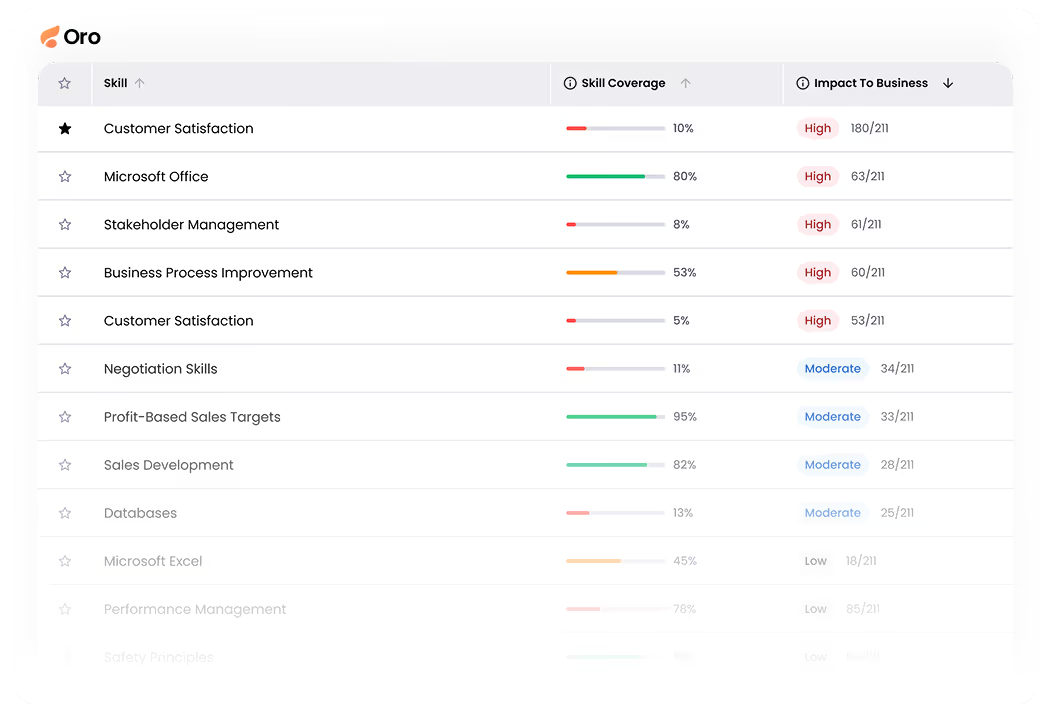
- Identifying future skills needs: Align learning initiatives with emerging trends and strategic goals.
- Balancing time and training: Make learning flexible with on-demand, self-paced options.
- Engaging employees: Use interactive, relevant content that resonates with learners.
- Lack of career visibility: Clearly define career paths to show how new skills open new opportunities.
How to build an effective upskilling and reskilling strategy
Support for upskilling and reskilling starts with intention. Here’s how to put it into practice:
- Start with strategy. Tie learning programs to workforce data and business objectives.
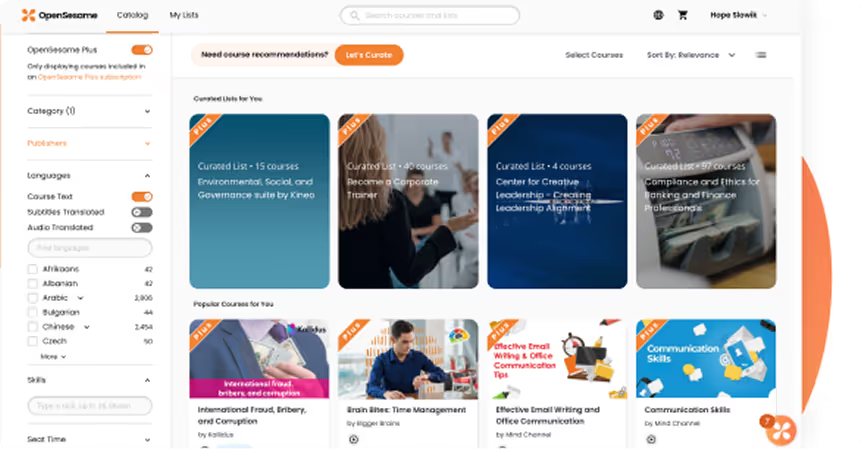
- Choose the right platform. Look for learning solutions that are easy to access, use, and customize.
- Foster a growth-oriented culture. Encourage curiosity, reward development, and celebrate lateral moves.
- Show the career path. Help employees see how new skills can unlock future roles and opportunities.
Real-life examples
From designers leveling up their creative skillsets to production workers pivoting into tech-driven roles, organizations everywhere are using upskilling and reskilling to:
- Build career pathways and increase participation in professional development, according to Align Technology’s global learning strategy
- Improve retention and help entry-level workers grow into leadership roles, according to Goodwill Industries of Southern Arizona’s workforce development approach
- Accelerate onboarding and equip employees with business and leadership skills, according to Everence Financial’s updated training program
These strategies don’t just respond to change; they employ your team to lead it.
Ready to build a learning culture that supports your people and your business? Reach out to discuss how OpenSesame can help drive real business impact from upskilling and reskilling.
FAQs
What’s the difference between upskilling and reskilling?
Upskilling builds on existing skills; reskilling trains employees for entirely new roles.
Why are upskilling and reskilling important?
They close skill gaps, retain talent, and help businesses stay competitive in changing markets.
How can I identify which skills to focus on?
Use workforce data, industry trends, and strategic goals to prioritize skill development.
What are the benefits of reskilling employees internally?
It saves recruitment costs, retains institutional knowledge, and boosts morale.
How do I keep employees engaged in learning?
Offer flexible, relevant, and interactive training tailored to their needs.