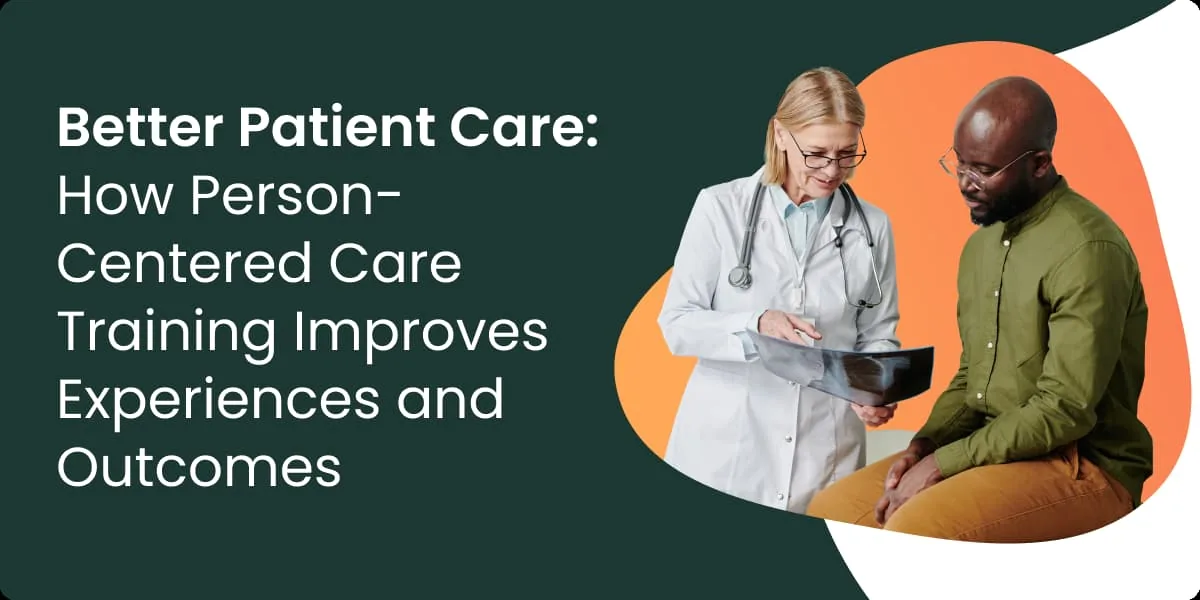

What is person-centered care
When healthcare organizations integrate person-centered care (PCC) training, they empower staff to deliver more compassionate, patient-focused care—leading to stronger patient relationships, better experiences, and improved outcomes.
Person-centered care (PCC) training helps organizations champion a more human approach to healthcare—one that treats each individual with dignity, respect, and compassion. It means recognizing the unique values, preferences, and needs of every patient, and working in partnership with them to design care plans that align with their goals and way of life. PCC strikes the essential balance: delivering safe, high-quality medical care while putting people—not just conditions—at the center of every decision.
According to the American Association of Colleges of Nursing “Leaders in person-centered care environments set the tone for how they and others enact and maintain a person-centered care culture, and that they put the relationship before the task when planning and delivering care.”
Source: American Association of Colleges of Nursing
Competency evaluations: Ensuring readiness for person-centered practice
Regular competency assessments help ensure caregivers are equipped with both the clinical expertise and the human touch needed to deliver truly patient-centered care. PCC competency includes everything from technical skills to communication and empathy. Organizations can spot opportunities for growth and guide staff toward meaningful improvement. OpenSesame publishers like AMC and Elsevier offer trusted training that reinforces person-centered care while upholding safety and the highest standards in healthcare delivery.
Integrating competency assessments into healthcare training
Incorporating competency assessments into healthcare training programs offers several benefits:
- Enhanced patient outcomes: Ensuring that healthcare providers are competent in PCC principles leads to more effective patient engagement and improved health outcomes.
- Standardization of care quality: Regular evaluations promote consistency in care delivery, upholding high standards across healthcare settings.
Leveraging online training resources
To support the development of competency fundamentals for person-centered care, OpenSesame offers comprehensive course lists tailored to healthcare professionals seeking to improve their skills in patient care. The "Person-Centered Care Training" list provides courses focused on patient and healthcare professional partnerships as well as patient engagement strategies. Similarly, the "Healthcare Safety Essentials" list offers resources on conducting and utilizing competency assessment to improve care quality. All of the lessons within the lists offer continuing education units.
Investing in person-centered care training is more than a compliance checkbox—it’s a powerful way to build trust, improve patient satisfaction, and support better outcomes. With expert-curated courses from OpenSesame partners like AMC and Elsevier, healthcare organizations can confidently equip their teams with the skills they need to deliver care that’s not only clinically sound, but deeply compassionate.
.webp)