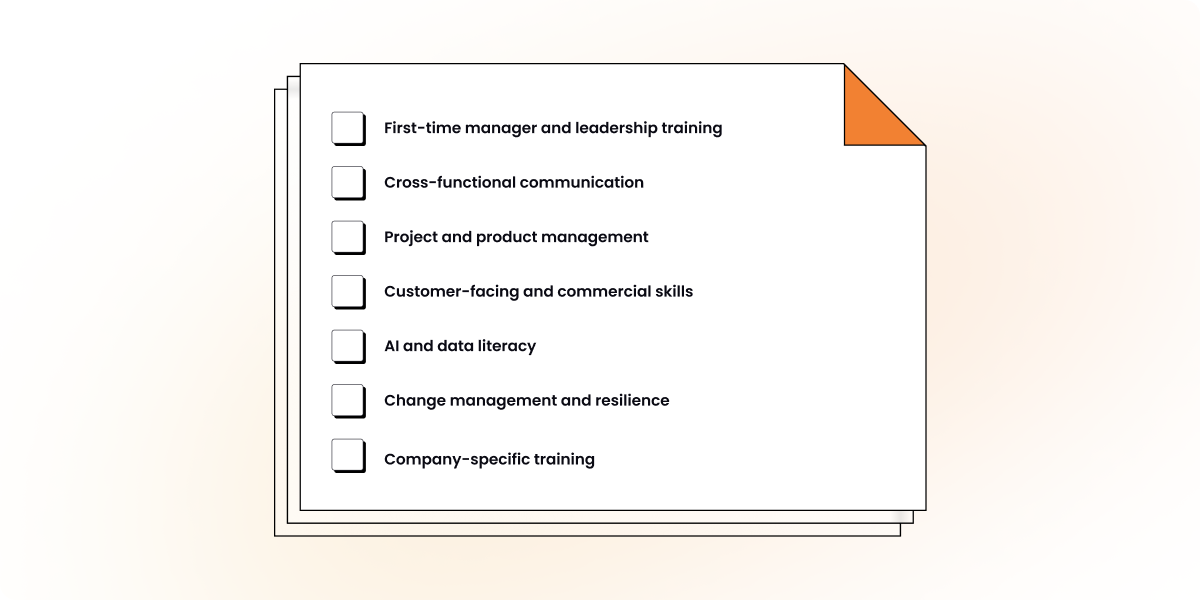

A skills gap is the difference between the skills employees have and the skills they need to do their jobs well or meet business goals.
According to Robert Half's 2026 research, 62% of hiring managers say skills gaps are more pronounced than a year ago.
The good news? You don't need to close every gap at once. Start with the skills that matter most.
Why skills gaps matter
Skills gaps can affect productivity, customer experience, employee confidence, and workforce readiness.
Whether it's new technology, changing compliance requirements, or evolving job responsibilities, the question is the same: Do your people have the skills your business needs?
How to identify a skills gap
Start with the business need and work backward.
- Define the goal. What needs to improve?
- Identify the skills. What must employees be able to do?
- Assess current capabilities. Use performance data, assessments, and manager feedback.
- Find the gaps. Where do current skills fall short?
- Set priorities. Which gaps matter most to business performance?
How to close skills gaps
Target the skill. Use upskilling or reskilling to build the capabilities employees need.
Make room for practice. Scenarios, simulations, and hands-on learning help people move from knowing to doing.
Involve managers. Coaching, observation, and feedback reinforce on-the-job learning.
Make learning accessible. Choose training that fits employees' roles, schedules, and existing systems.
Measure what changes
Course completion shows participation, not necessarily capability. Look for improvements in performance, fewer errors, stronger assessments, or manager observations.
Measure what people can do differently, not just what they've completed.
Build skills that move your business forward
Skills gaps will change as work changes. The goal is to identify what matters, build the right capabilities, and keep learning relevant.
OpenSesame helps companies find and deliver learning across required training, essential skills, and workforce development.
Ready to close the gaps that matter most?
FAQs
What is a skills gap analysis?
A comparison of current employee skills with those needed for a role or business goal.
What's the difference between upskilling and reskilling?
Upskilling builds skills for a current role. Reskilling prepares employees for a different one.
How do you measure progress?
Track how skills are applied, performance improvements, and relevant business outcomes.